




The End of the Real
2026
Common Realities in Common Museums: Making the Production of Reality Visible Through the Study of Museum Surveillance Systems
This project explores a simple but political question: how is contemporary reality produced? Rather than treating reality as something that simply exists, we argue that it is continuously shaped by infrastructures, institutions, technologies, and everyday practices. Today, these processes are increasingly opaque, making it difficult to understand how decisions that affect our lives are made.
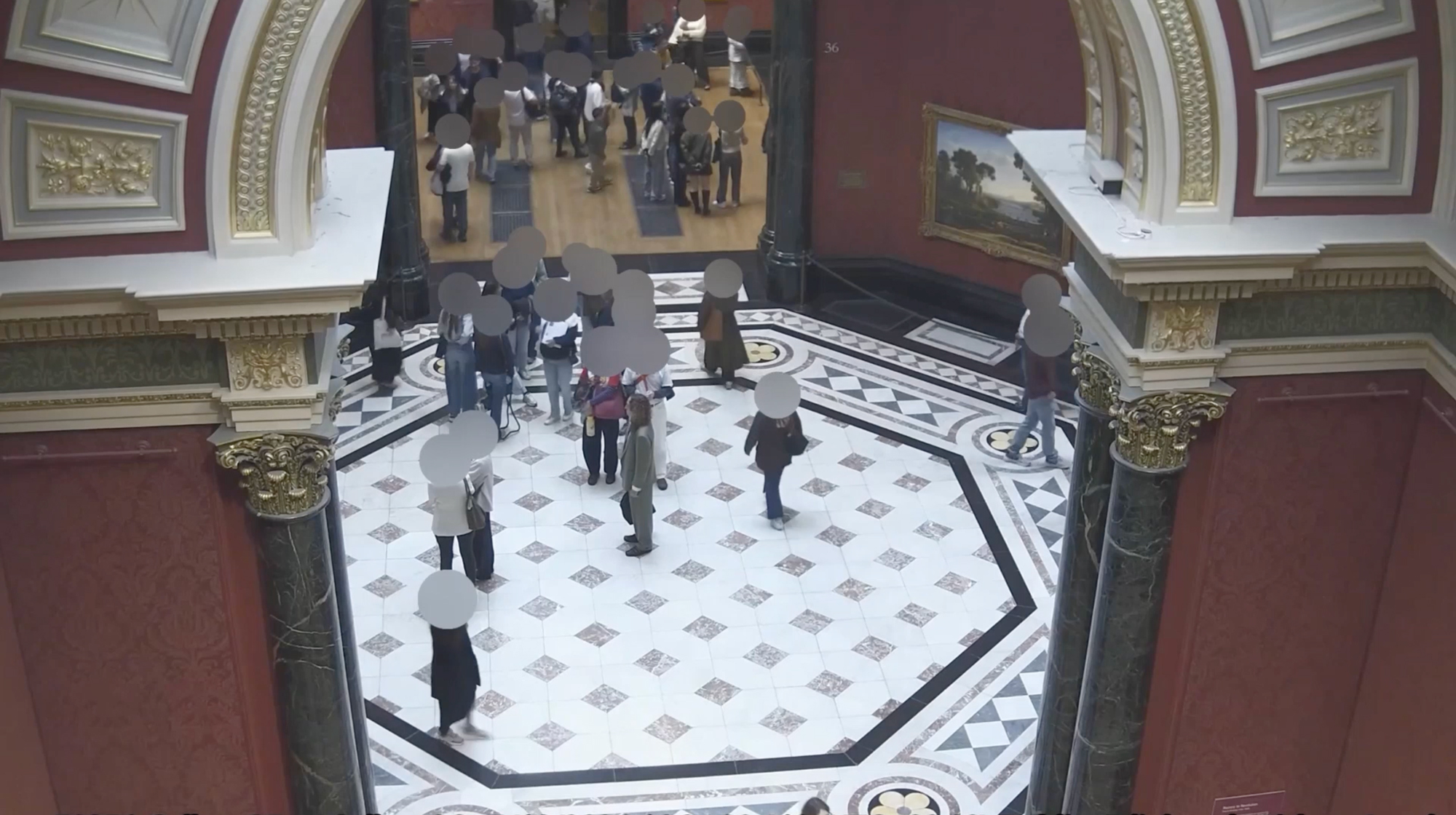
To make these invisible systems visible, we focus on a familiar object: the surveillance camera in a museum. The camera itself is not our subject; it is an entry point into a much larger infrastructure of image capture, data storage, algorithmic analysis, behavioral classification, and human decision-making.
Museums are ideal sites for this inquiry. While they teach visitors how cultural and historical narratives are constructed, they rarely explain the surveillance technologies that operate within their own spaces. Our project proposes extending the museum's educational role to include these systems—not by rejecting surveillance, but by making it transparent.
Presented in July 2026, the prototype includes an open letter, Common Realities in Common Museums, inviting cultural institutions to become leaders in technological literacy, transparency, and digital rights. It is based on four principles: clearly informing visitors about surveillance; explaining how the entire surveillance infrastructure—including AI—works; making data collection and retention practices understandable; and helping visitors exercise their rights under data protection law.
The project also takes the form of an interactive website that explains museum surveillance and visitors' data rights, while remaining open to future formats such as guided tours, educational installations, and public programs.
Ultimately, the project argues that transparency is not only a legal obligation but a democratic responsibility. By revealing the infrastructures that shape everyday reality, museums can help the public understand—and critically engage with—the technologies that increasingly govern contemporary life.
VISIT THE WEBSITE AND ACCES TO THE OPEN LETTER:
commonrealities-commonmuseums.com
CREDITS
Project conceived under the framework of Organismo, Museo Nacional Thyssen-Bornemisza and TBA21 Academy as part of the case The End of the Real - Building Tools to Navigate Reality in the Absence of a Common Truth
Facilitated by Museo Nacional Thyssen-Bornemisza in collaboration with Observatorio Complutense de la Desinformación
Led by Domestic Data Streamers and Saúl Baeza
Team: Carla de la Torre, David Varhergyi, Hadaly Villasclaras, Henrique Àlves, Daniela Concepción Castanedo, Elena Zaghis
The contents presented on this website are the exclusive work of the researchers of Organismo 2026. TBA21–Academy and Museo Nacional Thyssen-Bornemisza do not hold editorial control over these contents and are not responsible for the opinions or representations expressed therein. The authors retain their copyright, and the above-mentioned institutions respect and use their works in accordance with the terms agreed upon in the program. All creations developed within the framework of the Organismo project are under the Creative Commons CC BY-SA 4.0 license.